
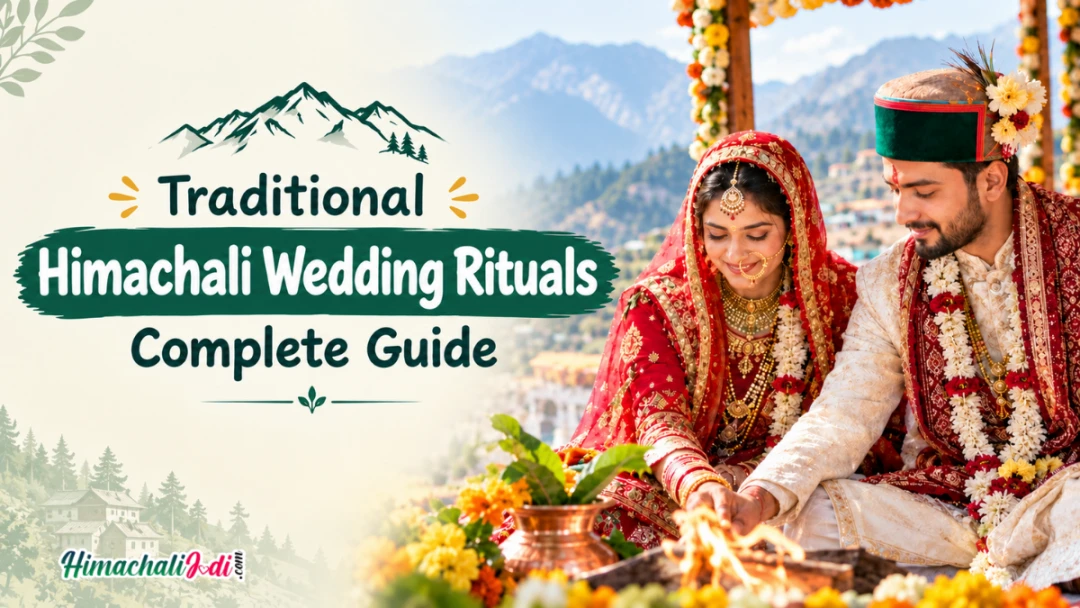
Traditional Himachali Wedding Rituals: Complete Guide to Pahari Wedding Ceremonies
Himachali wedding rituals are more than a collection of ceremonies. They bring families together through traditional blessings, celebrations, marriage customs, farewell rituals, and community gatherings.
A traditional Himachali wedding may begin with pre-wedding functions and continue through the wedding ceremony, Vidaai, Griha Pravesh, and other family celebrations. The exact order, names, and customs can differ from one part of Himachal Pradesh to another.
Family traditions, local communities, regional practices, and religious customs can all influence how a wedding is celebrated.
This guide explains the major ceremonies commonly associated with traditional Pahari weddings in a simple, easy-to-follow order. It also highlights an important point: there is no single wedding format that every Himachali family follows.
Important: Wedding customs may vary between regions, communities, and families. Some rituals may be changed, combined, added, or skipped according to family tradition.
Traditional Himachali Wedding Rituals at a Glance
| Wedding Stage | Common Ceremonies & Celebrations |
| Pre-Wedding | Tika/Shagun, Devta blessings, Haldi/Tael, Mama Swagat, Mehndi where followed |
| Wedding Day | Sehra Bandi, Baraat, Welcome/Milni, Mandap ceremony, Kanyadaan, Saptapadi/Pheras |
| Post-Wedding | Vidaai, Griha Pravesh, family welcome |
| Celebration | Wedding songs, Nati, traditional music and Dham where customary |
This overview gives you the basic wedding journey. The sections below explain the purpose of each stage without repeating the same ceremony details again and again.
Pre-Wedding Himachali Wedding Rituals
The pre-wedding period is a time for families to prepare for the marriage and celebrate with relatives. Depending on local and family traditions, these functions may take place over several days.
1. Tika or Shagun Ceremony
Tika or Shagun can be an important pre-wedding function in Himachali families.
Family members may come together for traditional greetings, blessings, sweets, gifts, and other customary activities. Tika may also be applied during the gathering.
The ceremony represents an important step toward the upcoming marriage and creates a positive beginning to the wedding celebrations.
The exact customs and items exchanged can differ between families.
2. Devta Blessings Before the Wedding
Devta blessings may form an important part of wedding preparations in some Himachali families.
Families may offer prayers or worship before the main wedding celebrations. This can take place at home or at a temple according to local practice.
The timing, offerings, and method can vary considerably.
This is one reason traditional Himachali marriage customs cannot always be described using one fixed sequence.
3. Haldi and Tael Rituals
Haldi or Tael may be performed before the wedding in families that follow this custom.
A turmeric-based paste may be applied to the bride or groom by relatives. The function is often a relaxed family gathering where close relatives can spend time together before the main wedding.
Traditionally, the ritual is associated with preparation, good wishes, and an auspicious beginning.
Modern families may keep the traditional ceremony while making the event more colourful and social.
4. Mama Swagat Ceremony
Mama Swagat is a traditional ceremony associated with the formal welcome of the maternal uncle and his family.
The maternal uncle may be welcomed through greetings, sweets, gifts, blessings, music, or other local customs.
The exact method depends on the family and region, but the central idea is to give the Mama a special welcome during the wedding celebrations.
5. Mehndi and Other Pre-Wedding Celebrations
Some families include Mehndi as part of their wedding programme.
The bride may have henna applied while relatives and friends gather for food, music, photographs, and informal celebrations.
Mehndi is not unique to Himachal Pradesh. It is a wider Indian wedding tradition that is also followed by some Himachali families.
Wedding Day Himachali Wedding Rituals
The wedding day brings together the groom's procession, the welcome by the bride's family, and the main marriage ceremony.
The order can vary, but these are commonly recognised parts of the wedding journey.
1. Sehra Bandi
Sehra Bandi takes place as the groom prepares to leave for the wedding.
His wedding clothes, headgear, and Sehra are arranged before the Baraat begins. Family members may help him get ready and give their blessings.
It represents the groom's final preparation before joining the wedding procession.
2. Baraat and the Groom's Arrival
The groom travels to the wedding venue with the Baraat.
Relatives and friends accompany him, while traditional music, drums, dancing, or other forms of celebration may be part of the procession.
When the Baraat reaches the venue, the celebration moves toward the formal welcome and marriage ceremonies.
3. Traditional Welcome and Milni
The groom and his relatives are welcomed by the bride's side.
Milni may be performed during this meeting. Relatives from both families may greet one another through traditional gestures, garlands, gifts, or blessings.
The style of the welcome is not identical everywhere and may reflect local family customs.
4. Mandap and Main Marriage Ceremony
The Mandap is the central space where the main marriage rituals take place.
A priest generally guides the couple and family members through prayers, offerings, sacred-fire rituals, and other required steps.
The Mandap ceremony forms the central part of the wedding, while some surrounding customs may reflect the family's local Himachali traditions.
5. Kanyadaan
Kanyadaan is a traditional Hindu marriage ritual involving the bride's parents and the couple.
The bride's parents participate in a formal ceremony representing the giving of their daughter's hand in marriage.
Its exact method and position within the wedding ceremony may differ according to the family's religious tradition.
6. Saptapadi and Saat Phere
Saptapadi refers to the seven steps taken by the couple during a Hindu marriage ceremony.
In many weddings, the couple also takes seven rounds around the sacred fire, commonly known as Saat Phere.
These steps or rounds are traditionally connected with promises and responsibilities associated with married life.
The exact sequence and wording may differ depending on the wedding tradition followed by the family.
7. Sindoor, Mangalsutra and Other Marriage Customs
Some Himachali Hindu families may include Sindoor, Mangalsutra, or other traditional marriage symbols.
These customs are also followed in many other parts of India, so they should not be presented as practices unique to Himachal Pradesh.
Their use and sequence can differ between families.
8. Blessings After the Main Ceremony
After the main marriage ceremony is completed, the newly married couple may receive blessings from relatives and guests.
This marks the transition from the formal marriage ceremony to the post-wedding stage.
Post-Wedding Himachali Wedding Rituals
The post-wedding stage focuses on farewell, homecoming, family blessings, and continued celebrations.
1. Vidaai Ceremony
Vidaai is the bride's farewell from her parental home.
It is traditionally an emotional part of the wedding as the bride leaves with the groom after the marriage ceremony.
Family members offer their good wishes as she begins a new stage of married life.
2. Griha Pravesh
Griha Pravesh takes place when the newly married bride arrives at the groom's home.
The family may arrange a traditional welcome involving blessings and small household customs.
The exact method can be different across families and regions.
3. Post-Wedding Family Welcome
After the couple arrives, relatives may gather to welcome them.
Food, blessings, greetings, and smaller family customs may form part of the gathering.
Some families may also follow additional local practices that are not common throughout Himachal Pradesh.
4. Wedding Feast and Dham
Dham is a traditional Himachali ceremonial meal that may be served during weddings and other important occasions.
It is more than an ordinary meal and generally includes several traditional preparations served as part of a family or community celebration.
However, Dham is not compulsory at every Himachali wedding. Its menu and style can vary according to the region and family tradition.
Traditional Himachali Wedding Songs, Music and Dance
Wedding celebrations are not limited to formal ceremonies. Songs, music, dance, and traditional food can add a strong local character to the occasion.
1. Traditional Wedding Songs and Sanskar Geet
Traditional wedding songs may be sung during family gatherings and different stages of the wedding.
Some songs are specifically associated with marriage and may be passed from one generation to another.
These songs add cultural character to the celebration without necessarily being part of the formal marriage ceremony.
2. Nati During Wedding Celebrations
Nati may be performed during weddings and other festive gatherings.
Guests may join the dance when traditional music is being played, creating a lively atmosphere for family and friends.
Nati is primarily a form of celebration rather than a compulsory marriage ritual.
3. Traditional Instruments at Weddings
Traditional instruments may accompany Baraat processions, songs, dances, and other festive moments.
The instruments used can vary by region. As a result, the sound and style of wedding celebrations may differ across different parts of Himachal Pradesh.
4. How Music and Dance Add to the Celebration
Music and dance bring energy and a sense of community to the wedding.
They may appear during the Baraat, family functions, welcoming ceremonies, or evening celebrations.
Their main role is festive and social rather than part of the formal marriage vows.
Traditional Himachali Wedding Attire
Traditional wedding clothing varies considerably across Himachal Pradesh.
There is no single outfit that represents every Himachali bride or groom.
1. Traditional Himachali Bride's Wedding Look
A Himachali bride may wear regional clothing, jewellery, and accessories according to her family's customs.
Some brides choose a completely traditional appearance, while others combine traditional pieces with contemporary bridal outfits.
The final look can depend on regional identity, family tradition, and personal preference.
2. Traditional Jewellery and Nath
Traditional jewellery can be an important part of the bridal appearance.
A Nath, or traditional nose ring, is associated with bridal jewellery in several Himachali traditions. Its design and size can vary according to region and community.
Therefore, it would not be accurate to suggest that every Himachali bride wears exactly the same jewellery.
3. Traditional Himachali Groom's Wedding Dress
A groom may wear traditional regional clothing, a Himachali topi, or selected traditional accessories.
Other grooms may prefer modern wedding clothing while keeping one or two Himachali elements in their appearance.
4. Regional Differences in Wedding Attire
Clothing, embroidery, jewellery, headgear, and accessories can differ between regions and communities.
This regional variety is an important part of understanding Pahari wedding traditions.
Are Himachali Wedding Rituals the Same Everywhere?
No. Himachali wedding rituals are not exactly the same in every region or family.
Himachal Pradesh has many local traditions, and wedding ceremonies can change according to location, community, family practice, and religious customs.
Why Wedding Rituals Can Differ Across Himachal Pradesh
Differences may appear in:
- Names of ceremonies
- Order of ceremonies
- Wedding songs and music
- Clothing and jewellery
- Food and feast traditions
- Post-wedding customs
A ceremony that is important in one area may be performed differently—or may not be followed—in another.
Regional, Community and Family Variations
Even families living in the same region can have slightly different wedding practices.
For this reason, a guide to marriage customs in Himachal Pradesh should explain commonly seen practices while clearly acknowledging local variation.
This approach helps readers understand the culture without assuming that every Himachali family celebrates a wedding in exactly the same way.
Which Practices Are Commonly Seen?
Some ceremonies and celebrations frequently associated with traditional Himachali weddings include:
| Wedding Stage | Examples |
| Pre-Wedding | Tika/Shagun, Devta blessings, Haldi/Tael, Mama Swagat |
| Wedding Day | Sehra Bandi, Baraat, Welcome/Milni, Mandap ceremony |
| Marriage Ceremony | Kanyadaan, Saptapadi/Pheras, other customary rituals |
| Post-Wedding | Vidaai, Griha Pravesh, family welcome |
| Celebration | Wedding songs, Nati, traditional feast/Dham where customary |
This is a guide to commonly seen practices, not a fixed rule for every Himachali family.
What Happens at a Traditional Himachali Wedding From Start to Finish?
The complete wedding journey can be understood through three simple stages.
Before the Wedding
Pre-wedding ceremonies → family celebrations → final preparations
Wedding Day
Groom's preparation → Baraat → Welcome → Main marriage ceremony → Blessings
After the Wedding
Vidaai → Griha Pravesh → Family welcome → Feast and celebrations
This quick journey map avoids repeating the detailed ceremony explanations already covered above.
How Himachali Wedding Rituals Are Celebrated Today
Traditional ceremonies can still have an important place in modern Himachali weddings, although the way they are presented may have changed.
1. Traditional Rituals With Modern Weddings
Families may follow traditional ceremonies while using modern venues, decoration, photography, entertainment, and contemporary clothing.
The wedding setting may look modern while the central ritual remains traditional.
2. Customs Families Continue to Preserve
Some families continue the ceremonies that have particular importance in their local tradition.
Others may shorten the programme, combine traditional rituals, or include newer wedding functions alongside older customs.
3. Regional Traditions in Modern Weddings
Traditional songs, local clothing, Nati, regional food, and other customs may still appear alongside modern wedding arrangements.
This allows families to preserve meaningful traditions while adapting the celebration to present-day preferences.
FAQs About Himachali Wedding Rituals
Q1: Are all traditional Himachali wedding rituals compulsory?
No. There is no single fixed list of compulsory rituals followed by every Himachali family. Families may continue, combine, modify, or skip certain customs according to their traditions.
Q2: What makes a Himachali wedding different from other Indian weddings?
Himachali weddings can have a distinct regional character through Pahari wedding songs, Nati, traditional attire, regional food, family customs, and local wedding practices.
Q3: Can modern Himachali weddings include traditional rituals?
Yes. Families can combine traditional Himachali wedding rituals with modern venues, decorations, photography, entertainment, and contemporary wedding outfits.
Q4: Is Nati a compulsory part of a Himachali wedding?
No. Nati is primarily a traditional form of celebration and may be performed during wedding festivities, but it is not a compulsory marriage ritual.
Conclusion
Himachali wedding rituals represent a journey of family celebrations, traditional ceremonies, blessings, marriage customs, and post-wedding gatherings.
The wedding period may move from Tika, Haldi, Devta blessings, and other pre-wedding functions to the Baraat and main marriage ceremony. It may then continue with Vidaai, Griha Pravesh, family welcomes, traditional food, music, and celebrations.
The most important thing to remember is that Himachali wedding customs are not identical everywhere. Their form, order, and importance can change according to region, community, religious tradition, and family practice.
Understanding this diversity makes it easier to appreciate traditional Pahari wedding ceremonies without reducing Himachal Pradesh's rich wedding culture to one fixed format.
Recent Blogs
- Traditional Himachali Wedding Rituals: Complete Guide to Pahari Wedding Ceremonies
- Himachali Marriage Traditions Explained: Culture, Customs & Family Values
- Signs of a Healthy Relationship Before Marriage: How to Know If You're Ready
- How to Choose the Right Life Partner: A Practical Guide for Marriage
- How to Approach Someone on a Matrimony Site: First Message Tips & Examples
- Best Matrimony Profile Headlines: Tips, Examples & Ideas
